
Tuesday, June 30, 2009
Honeybee on butterfly milkweed on June 30, 2009
Please click on image to ENLARGE view of honeybee on milkweed on June 30, 2009, at World Peace Wetland Prairie.


Thursday, June 25, 2009
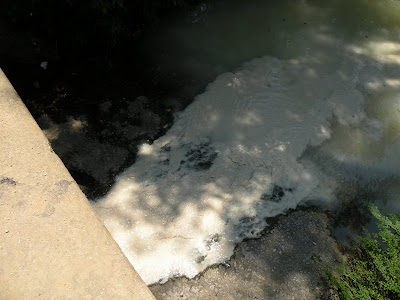
Hill Place contractor's machine compacting street base, water added, water carries limestone silt into Town Branch of Beaver Lake Watershed
Please click on image to see where limestone-dust siltation orginates and where it is going.



Sunday, June 21, 2009
Butterfly gardens easy to grow all over, especially in the black, rich soil of the Town Branch valley in south Fayetteville, Arkansas


Butterfly gardens can be grown throughout the
United States. There is a wide variety of both butterfly
attracting (nectar) plants and host (food) plants cover-
ing climates zones throughout the country.
Creating a Garden
Gardens can range in size from containers to sever-
al acres. Butterflies like sunny sites and areas sheltered
from high winds and predators. Warm, sheltered sites
are most needed in the spring and fall. Butterflies are
cold-blooded insects that can only fly well when their
body temperatures are above 70oF. They are often seen
resting on rocks, which reflect the heat of the sun help-
ing to raise their body temperatures, so be sure to
include some rocks in your garden. It’s also beneficial
to have partly shady areas, like trees or shrubs, so they
can hide when it’s cloudy or cool off if it’s very hot.
Plants that attract butterflies are usually classified
as those that areafood source,anectar source or both.
Butterflies require food plants for their larval stages and
nectar plants for the adult stage. Some larvae feed on
specifichost plants, while others will feed on a variety
of plants. If possible, include both larval host plants
and adult nectar plants in your butterfly garden.
Butterflies also like puddles. Males of several
species congregate at small rain pools, forming “puddle
clubs”. Permanent puddles are very easy to make by
buryingabucket to therim, filling it with gravel or
sand, and then pouring in liquids such as stale beer,
sweet drinks or water. Overripe fruit, allowed to sit for
afew days is a very attractive substance to butterflies
as well!
Life Cycle of A Butterfly
Butterflies go through a four-stage developmental
process known as metamorphosis (egg, larva or caterpil-
lar, pupa or chrysalis and adult). Understanding a but-
terfly’s life cycle can make butterfly watching more
enjoyable, andthis knowledge is an important asset to
those who want to understand the principles of attract-
ingbutterflies to their gardens.
Butterflies begin their life as an egg, laid either
singly or in clusters depending on the species. A very
tiny caterpillar emerges and, after consuming its egg
shell, begins feeding on its host plant. Caterpillars must
crawl out of their skin or molt, usually around five times,
before changing into a pupa. Finally, an adult butterfly
emerges, spreads its wings and flies away.
Butterflies typically lay their eggs in late spring and
hatch 3 to 6 days after they are laid. It takes 3 to 4
weeks for a caterpillar to pupate and 9 to 14 days to
emerge as an adult.
Host Plants
Adult female butterflies spend time searching for
food plants required by the immature caterpillar stage.
Most butterflies have specific host plants on which they
develop. For example, caterpillars of the monarch but-
terfly develop only on milkweed, while the black swal-
lowtail feeds only on parsley, dill and closely related
plants. Planting an adequate supply of the proper host
plants gives butterflies a place to lay their eggs, which
will successfully hatch and result in butterflies that will
continue to visit thegarden. Providing the necessary
food plants for the developing caterpillars also allows
production of a “native” population that can be
observed in all stages ofdevelopment.
To enjoy adult butterflies, you have to be willing to
allow their caterpillars to feed on foliage in your garden.
Food source plants that support caterpillars include the
annual marigold, snapdragon and violet; the perennial
butterfly milkweed, daisy and various herbs; the ash,
birch, cherry, dogwood, poplar and willow trees; lilac
shrubs; juniper evergreens and more.
The weediness of some host plants makes them less
than desirable for a space within your more attractive
garden beds, but they serve the same function if you
place them away in a corner of the yard. To keep them
from becoming invasive, remember to remove their
spentblooms before they go to seed.
Plants to Attract Butterflies
To attract the most butterflies, design a garden
that provides a long season of flowers (nectar plants).
The time of flowering, duration of bloom, flower color
and plant size are all important considerations when
selecting plants to attract butterflies. A wide variety of
food plants will give the greatest diversity of visitors.
Choose a mixture of annuals and perennials.
Annuals bloom all summer but must be replanted every
spring (after the last frost). Perennials bloom year after
year from the same roots but their blooming periods are
typically limited to a few weeks or months. To ensure
the availability of nectar sources throughout the sum-
mer, long-blooming annuals should be planted between
the perennials.
Try staggering wild and cultivated plants, as well as
blooming times of the day and year. Planting in mass
(several plants of the same kind) will usually attract
more butterflies, as there is more nectar available to
them at a single stop. Plants with clusters of flowers
are often better than plants with small, single flowers
because it is easier for butterflies to landon clustered
and/or larger flowers.
Many plants which attract butterflies, especially
trees and shrubs, may already be present in a specific
area. Shrubs include azalea, spirea, butterfly bush and
lilacs. Although weeds andsomenative plants are gen-
erally not welcomein a garden, allowingthem to grow
under supervision may be an option, as these plants
help attract butterflies. Try to avoid plants that readily
reseed and may take over and dominate garden sites.
Perennials, such as chives, dianthus, beebalm, but-
terfly weed, mints, black-eyed susan and purple cone-
flower offer a succession of blooms, other perennials
include coreopsis, lavender, phlox, sedum and yarrow.
Add annuals that flower all season, such as cosmos, lan-
tana, pentas,petunias, phlox, salvia and zinnias. Select
flowers with manysmall tubular flowers or florets like
liatris, goldenrod and verbena. Or chose those with sin-
gle flowers, such as marigold, daisy and sunflower.
Butterflies are attracted to flowers with strong
scents and bright colors, where they drink sweet energy-
rich nectar. Planting a variety of nectar sources will
encourage more butterflies to visit the garden.
For better butterfly viewing, plant the tallest
plants in the rear of the garden and work smaller or
shorter towardthefront.
Butterfly
Gardens
Creating, Growing and Enjoying
EARLMAYSEED&NURSERY
www.earlmay.com
SHENANDOAH, IOWA51603
Butterfly Host Plants(continued)
Trees Herbs
Ash Dill
Birch Parsley
Cherry Sweet Fennel
Dogwood
Linden
Poplar
Willow
Butterfly Attracting Plants
Annuals Perennials
Ageratum Aster
Cosmos Beebalm
Gomphrena Blanket Flower
Heliotrope Butterfly Milkweed
Lantana Coreopsis
Marigold Daisy
Nasturtium Dame’s Rocket
Nicotiana Daylily
Pentas Dianthus
Petunia Liatris
Phlox Phlox
Salvia Purple Coneflower
Snapdragon Rudbeckia
Statice Russian Sage
Sunflower Salvia
Sweet Alyssum Scabiosa
Verbena Sedum
Zinnia Veronica
Yarrow
Shrubs Herbs
Azalea Catnip
Butterfly Bush Chives
Lilacs Lavender
Mock Orange Mint
Potentilla
Viburnun
Cut Back on Insecticides
It’s difficult to have a successful butterfly garden
inalocation where insecticides are used. Pesticides,
specifically insecticides, kill not only the insects you
want to get rid of – they also kill the insects you want
tokeep, such as monarch caterpillars. Even biological
controls such as Bt (Bacillus thuringiensis) will kill but-
terfly larvae. When treating for insect pests, always
consider non-chemical methods of pest control before
turning to pesticides.
Let Your Garden Grow
Most butterfly species over-winter nearby. This
means that their eggs, chrysalises, or larvae are likely to
be in or near your yard during the non-gardening
months. Some will even hibernate as adults. Do not
mow weed sites, cut down dead plants or dismantle
woodpiles which provide them safe shelter in the off-
season until the weather warms up.
Enjoying Your Butterfly Garden
Butterfly gardens are a great source of enjoyment
for everyone. Visiting butterflies include a variety of
different species and names, depending upon the region
of the country in which you live. To learn more about
which plants help in attracting butterflies get your copy
of National Wildlife Federation Attracting Birds,
Butterflies and Other Backyard Wildlife by David
Mizejewski or the Earl May Perennial Guideavailable at
your local Earl May Nursery & Garden Center.
Butterfly Host Plants
Annuals Perennials
Marigold Butterfly Milkweed
Snapdragon Daisy
Violet
Shrubs Evergreens
Lilacs Juniper
IBM# 912600 750 4/08
Copyright Earl May Seed & Nursery L.C. ©
Thursday, June 18, 2009
Washington County found innocent. Watershed degradation being done by state highway department
Please click on images to ENLARGE view of Arkansas Highway and Transportation Department machine digging rich, dark well-vegetated soil out of a ditch on the west side of Arkansas 265 south of Fayetteville. An earlier post quoting a commuting motorist's email contained an error. Washington County is not to blame for this misguided work that threatens to increase the silt load of Cato Springs Branch, the lower Town Branch and the West Fork of the White River entering Beaver Lake. The soil being eroded is typical high-quality prairie topsoil that has washed into the ditch but should be back on farm or pasture or natural prairie land. This soil is hauled away and dumped, allowing more to erode away.


Saturday, May 30, 2009
Arkansas officials say 'Don't Do Fescue'
Arkansas “Don't Do Fescue" is theme of AGFC public campaign
JONESBORO - Tall fescue is a widely used forage crop. It is insect resistant, tolerates poor soil and climatic conditions well and has a long growing season. Unfortunately, tall fescue also has a downside.
With approximately four million acres of pasturelands planted in tall fescue, Arkansas has a great deal of this crop. According to David Long, agricultural liaison with the Arkansas Game and Fish Commission, the agency is working diligently to help the public understand the shortcomings of this type of grass.
"The AGFC has developed a new tool in its effort to educate landowners about the toxic and negative effects of Kentucky 31 Tall Fescue to farm wildlife. A new bumper sticker entitled 'Don't Do Fescue' is now being distributed to agency employees and others interested in spreading the word," Long said. Tall fescue is a common forage grass that has been planted across Arkansas for over 40 years.
Estimates are that about 70 percent-95 percent or 4 million acres of the pasturelands planted with tall fescue in Arkansas are infected with an endophyte fungus. The fungus causes declines in bobwhite quail, cottontail rabbits, grassland songbirds and also limited other game populations such as white-tailed deer and wild turkey.
"The fact that the plant is actually toxic to both domestic livestock and farm wildlife species is accepted by agriculture extension specialists and wildlife biologists alike," Long said. "The plant produces chemicals causing the fescue to have very toxic qualities. The alkaloids are found throughout the plant, but are especially concentrated in the seeds and leaves," he explained.
In cattle, the fungus causes excessive body temperatures, elevated respiratory rates, loss of appetite, body weight loss, lowered fertility rates and abortion of fetuses. Dairy cows often show sharp declines in milk production. Horses are affected also with more aborted fetuses, foaling problems, weak foals and reduced or no milk production. The CES estimates that this endopytic toxin cost American beef producers up to $1 billion a year in lost profits.
"It's very important for private landowners who desire viable wildlife populations on their property to know the effects of planting fescue," Long noted. "Many species of wildlife would directly suffer these same negative effects if they were confined to the pasturelands as are livestock. However, since they are free ranging, they simply avoid the fungus infected fescue pastures, but nevertheless, this results in loss of farm wildlife habitat on these acres. You may have deer and turkey travel through tall-fescue pastures, but they rarely find food sources available they can utilize, since the aggressiveness of the fescue usually results in solid stands of the plant," Long concluded.
The grass is a sod-forming turf with thick matted growth that also limits movement of young bobwhite quail, turkey and cottontail rabbits, provides no nesting habitat for wild turkey or quail, and is extremely poor habitat for many declining grassland species of songbirds. "Bottom line, fungus infected tall-fescue pastures offer little food, cover or nesting habitat to a broad range of farm wildlife," he said.
"Tall fescue has been planted in an estimated 4 million acres of the 5.4 million acres of pasture scattered over the state and for all practical purposes is of no value to farm wildlife. With the widespread establishment of tall fescue pastures, a great loss of wildlife habitat for deer, turkey, quail, cottontails and grassland songbirds has occurred.
Many landowners now recognize this problem and are interested in eliminating tall-fescue on some or all of their acreage. However, many landowners continue to plant tall-fescue, not knowing the detrimental effects it will have to wildlife. (There is an endophyte-free variety of tall fescue available for planting but it is less viable and hardy, and still provides very limited habitat for wildlife.)
We want to educate all landowners regarding this fact because there are other planting options to providing livestock forage and wildlife habitat on their farms," Long explained.
Please help spread the word to landowners "Don't Do Fescue!" by requesting a bumper sticker to place on your vehicle. Especially if they have an interest in managing for wildlife on their farm. For more information contact David Long at 877-972-5438 or dlong@agfc.state.ar.us.
JONESBORO - Tall fescue is a widely used forage crop. It is insect resistant, tolerates poor soil and climatic conditions well and has a long growing season. Unfortunately, tall fescue also has a downside.
With approximately four million acres of pasturelands planted in tall fescue, Arkansas has a great deal of this crop. According to David Long, agricultural liaison with the Arkansas Game and Fish Commission, the agency is working diligently to help the public understand the shortcomings of this type of grass.
"The AGFC has developed a new tool in its effort to educate landowners about the toxic and negative effects of Kentucky 31 Tall Fescue to farm wildlife. A new bumper sticker entitled 'Don't Do Fescue' is now being distributed to agency employees and others interested in spreading the word," Long said. Tall fescue is a common forage grass that has been planted across Arkansas for over 40 years.
Estimates are that about 70 percent-95 percent or 4 million acres of the pasturelands planted with tall fescue in Arkansas are infected with an endophyte fungus. The fungus causes declines in bobwhite quail, cottontail rabbits, grassland songbirds and also limited other game populations such as white-tailed deer and wild turkey.
"The fact that the plant is actually toxic to both domestic livestock and farm wildlife species is accepted by agriculture extension specialists and wildlife biologists alike," Long said. "The plant produces chemicals causing the fescue to have very toxic qualities. The alkaloids are found throughout the plant, but are especially concentrated in the seeds and leaves," he explained.
In cattle, the fungus causes excessive body temperatures, elevated respiratory rates, loss of appetite, body weight loss, lowered fertility rates and abortion of fetuses. Dairy cows often show sharp declines in milk production. Horses are affected also with more aborted fetuses, foaling problems, weak foals and reduced or no milk production. The CES estimates that this endopytic toxin cost American beef producers up to $1 billion a year in lost profits.
"It's very important for private landowners who desire viable wildlife populations on their property to know the effects of planting fescue," Long noted. "Many species of wildlife would directly suffer these same negative effects if they were confined to the pasturelands as are livestock. However, since they are free ranging, they simply avoid the fungus infected fescue pastures, but nevertheless, this results in loss of farm wildlife habitat on these acres. You may have deer and turkey travel through tall-fescue pastures, but they rarely find food sources available they can utilize, since the aggressiveness of the fescue usually results in solid stands of the plant," Long concluded.
The grass is a sod-forming turf with thick matted growth that also limits movement of young bobwhite quail, turkey and cottontail rabbits, provides no nesting habitat for wild turkey or quail, and is extremely poor habitat for many declining grassland species of songbirds. "Bottom line, fungus infected tall-fescue pastures offer little food, cover or nesting habitat to a broad range of farm wildlife," he said.
"Tall fescue has been planted in an estimated 4 million acres of the 5.4 million acres of pasture scattered over the state and for all practical purposes is of no value to farm wildlife. With the widespread establishment of tall fescue pastures, a great loss of wildlife habitat for deer, turkey, quail, cottontails and grassland songbirds has occurred.
Many landowners now recognize this problem and are interested in eliminating tall-fescue on some or all of their acreage. However, many landowners continue to plant tall-fescue, not knowing the detrimental effects it will have to wildlife. (There is an endophyte-free variety of tall fescue available for planting but it is less viable and hardy, and still provides very limited habitat for wildlife.)
We want to educate all landowners regarding this fact because there are other planting options to providing livestock forage and wildlife habitat on their farms," Long explained.
Please help spread the word to landowners "Don't Do Fescue!" by requesting a bumper sticker to place on your vehicle. Especially if they have an interest in managing for wildlife on their farm. For more information contact David Long at 877-972-5438 or dlong@agfc.state.ar.us.
Friday, May 22, 2009
Public hearing at 5:30 p.m. Tuesday to consider rezoning sale-barn property to allow Multistory apartment buildings next to National Cemetery
Please click on images to ENLARGE and read.


Friday, May 15, 2009
Annual War Eagle celebration Saturday near Huntsville
Please click on image to ENLARGE view of Audubon Arkansas invitation to the third annual War Eagle celebration tomorrow at Withrow Springs State Park.


Tuesday, May 12, 2009
Watershed groups must join to fight degradation of all area waterways
Please click on image to ENLARGE view of construction site mud being washed down S. Hill Avenue in Fayetteville, Arkansas, on May 11, 2009. Construction machines and dumptrucks put a lot of silt in Northwest Arkansas Streams. Watershed groups must combine forces to increase pressure on all jurisdictions in the region to enforce stormwater regulations to prevent flooding and to protect water quality.

The annual member's meeting of the Association for Beaver Lake Environment is at 6:30 p.m. TODAY (Tuesday, May 12th), at the Rogers Public Library.
We will be electing members for our Board of Directors. Hope to see you there.
IRWP Board of Directors Meeting
Tuesday, May 12, 6pm – 9pm
Rogers, Nabholz Construction Headquarters

The annual member's meeting of the Association for Beaver Lake Environment is at 6:30 p.m. TODAY (Tuesday, May 12th), at the Rogers Public Library.
We will be electing members for our Board of Directors. Hope to see you there.
IRWP Board of Directors Meeting
Tuesday, May 12, 6pm – 9pm
Rogers, Nabholz Construction Headquarters
Association for Beaver Lake Environment to meet at 6:30 p.m. Tuesday, May 12, 2009, TODAY
The annual member's meeting of the Association for Beaver Lake Environment is at 6:30 p.m. TODAY (Tuesday, May 12th), at the Rogers Public Library.
We will be electing members for our Board of Directors. Hope to see you there.
We will be electing members for our Board of Directors. Hope to see you there.
Wednesday, May 6, 2009
Subscribe to:
Posts (Atom)

 Posts
Posts

